

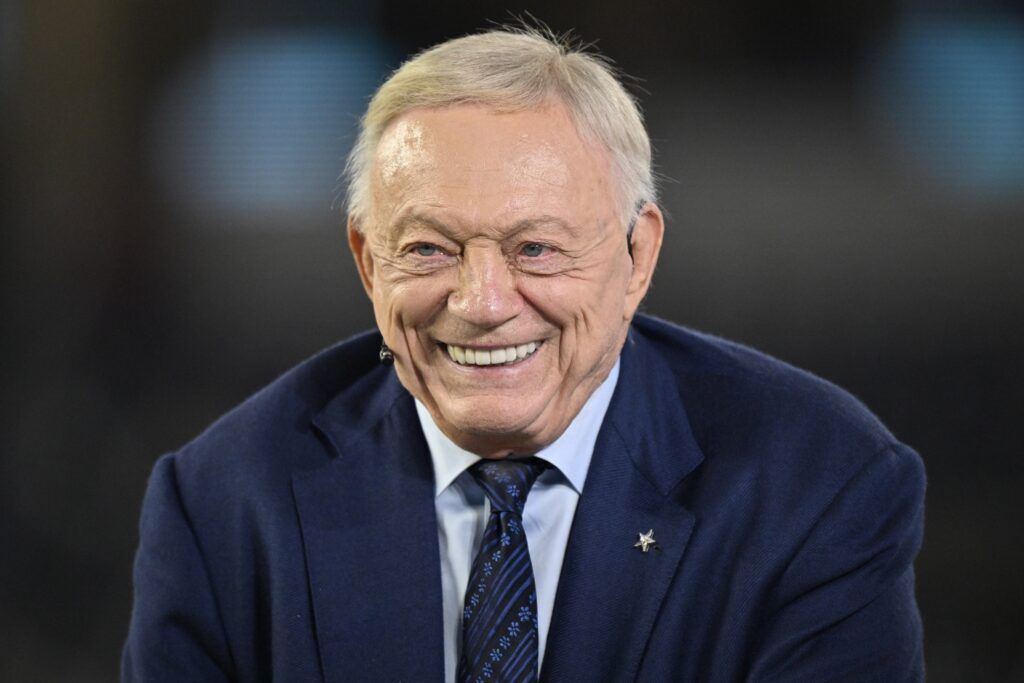
At 83 years old, Jerry Jones isn’t just sitting back and reminiscing about his legacy; instead, he’s ramping up his ambitions. As the Dallas Cowboys wrap up another season that feels a world away from championship glory, their owner and general manager are making it clear that they’re not content with just looking back at past achievements.
Jones has publicly framed his future in stark, competitive terms, placing himself in direct comparison with the most successful owner in NFL history and admitting the clock is ticking.
Jerry Jones Eyes History, Not Just One More Ring
Speaking candidly this week, Jones revealed what he called his true “goal in life”: retiring as the NFL owner who has won the most Super Bowls. “That’s my goal,” Jones said. “To be retired in the NFL as the owner that won the most Super Bowls. We’ve got three. Bob’s got how many? Six?”
The benchmark he’s aiming for is New England Patriots owner Robert Kraft, who leads the pack with six Super Bowl titles. Jones has three Lombardi Trophies from the Cowboys’ glory days in the early 1990s, specifically from the 1992, 1993, and 1995 seasons, which places him solidly in second place among all owners. However, the gap is considerable, especially given the Cowboys’ extended absence from serious contention.
“I’ve got work to do,” Jones admitted, acknowledging the scale of the challenge. When asked whether he would ever actually retire, Jones laughed it off, refusing to tempt fate. “I don’t want to dare the gods,” he said, leaving little doubt that he intends to remain deeply involved.
#Cowboys owner Jerry Jones says his goal in life is to retire as the owner who has won the most Super Bowls in the NFL.
Jones is 83 years old and has won 3 Super Bowls. #Patriots owner Robert Kraft leads with 6.
“I got work to do.” https://t.co/W7MuWTzY0T pic.twitter.com/qJs2NiZ1gZ
— Ari Meirov (@MySportsUpdate) January 7, 2026
The history behind his words adds depth to the sentiment. Jones bought the Cowboys in 1989 and orchestrated one of the quickest turnarounds the league has ever seen, clinching three Super Bowls within his first seven years as owner.
However, since then, Dallas hasn’t returned to the Super Bowl, nor has it advanced past the Divisional Round of the playoffs. The franchise hasn’t even reached an NFC Championship Game since the 1995 season, marking the longest conference-title drought in the NFC.
Recent results only amplify the contrast. The Cowboys missed the playoffs this season, finishing with a 7-9-1 record. At the same time, Kraft’s Patriots are once again preparing for a postseason run, leaving open the possibility that the gap Jones referenced could grow even wider. Currently, the Cowboys sit at sixth in offense, with an 84.8 grade in PFSN’s NFL Offense Impact Metric.
Critics have long pointed to Jones’ unique management style as a limiting factor. His hands-on approach, reluctance to fully embrace modern contract negotiations through agents, and preference for building primarily through the draft once worked brilliantly. In today’s NFL, defined by aggressive spending and constant roster churn, that model has struggled to keep pace.
Yet, Jones doesn’t seem to be backing down. His remarks convey a sense of urgency rather than defeat, suggesting he believes that change, adaptation, or bold moves could still alter the outcome. Whether that involves structural changes, shifts in philosophy, or simply exercising patience remains to be seen.
What’s evident is that Jones’ ambition hasn’t faded with time. As the Cowboys strive for relevance and the league continues to evolve, the owner’s self-imposed race against history may be entering its most crucial and intricate phase yet.
Related Products
-
Sale!
YouTheFan NFL Purebred Fans 500pc Puzzle – A Real …
Products Original price was: $19.99.$16.66Current price is: $16.66. -
Sale!
Successful Coaching American Football: Game Strate…
Products Original price was: $29.99.$23.59Current price is: $23.59. -
Sale!
Hydrapeak x NBA Officially Licensed All Team Stick…
Products Original price was: $34.95.$24.95Current price is: $24.95.